Capricorn, 1948-64 - by Max Ernst
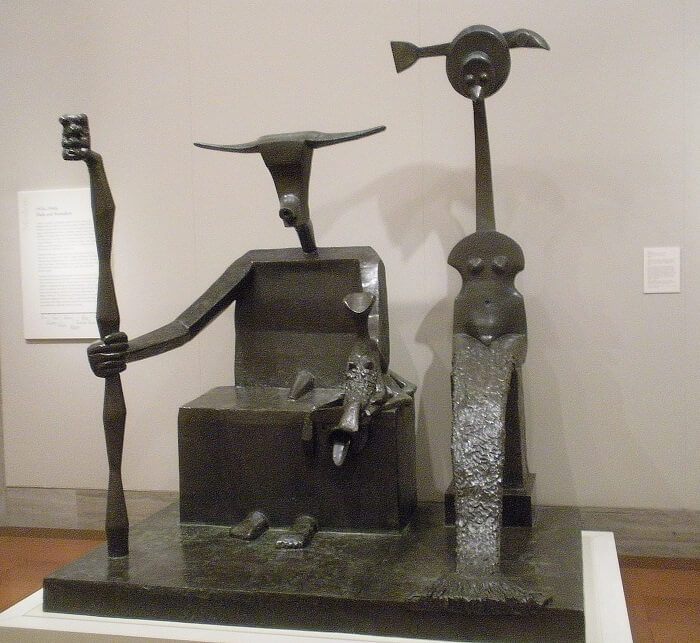
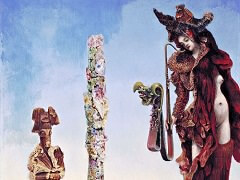
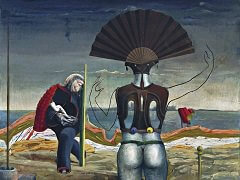
Despite gaining American citizenship in 1945, Max Ernst returned to France with his fourth wife Dorothea Tanning - a Surrealist painter herself - in 1953, becoming a naturalized French citizen in 1958, During the summer of 1945, Ernst become interested in chess and in line with his previous notions of representational potential he saw the figures used in the game in terms of their literary qualities and values, Ernst was fond of the writings of Lewis Carroll, whose heroine Alice encountered chess pieces in Through the Looking Glass. In Copricorn, a work developed between 1948 and 1964, Ernst depicts the king and queen. The 'King' is Pan, the Greek god of shepherds and flocks, Ernst depicting him with goat horns, human torso and arms, and complete with his crook. But who is his gueen? Is it Penelope, Pan's mother, who resisted her suitors after her husband left home for over 20 years? Is there a resonance with Ernst's first wife who he had abandoned 30 years before, only for her to die in Auschwitz? Surrealist depictions were so often imbued with these strange enigmas and Ernst was no exception,
Capricorn is a life-size bronze, designed almost certainly for an external site - he made a concrete version of it to place outside his and Tanning's Arizona homes,